

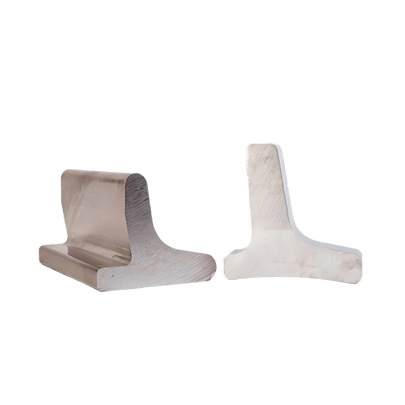
6061 Aluminum Plate, 6061 Aluminum Bar, and 6061 Aluminum Tube are among the most widely used
products in the aluminum industry. Known for their excellent balance of strength, corrosion resistance, machinability,
weldability, and lightweight performance, 6061 Aluminum Products are used across construction, transportation,
machinery, aerospace components, marine structures, and general fabrication. As global manufacturing continues to shift
toward lightweight, durable, and recyclable materials, the demand for 6061 aluminum alloy continues to grow
in both industrial and commercial applications.
This guide provides a clear and SEO-friendly overview of 6061 aluminum plate, 6061 Aluminum Bar,
and 6061 aluminum tube, including their definition, chemical properties, mechanical characteristics,
common product forms, specification tables, application trends, processing advantages, and market usage insights.
The content is designed for use in blog posts, category pages, industry pages, and product knowledge pages.
6061 aluminum is a heat-treatable aluminum alloy in the 6xxx series, primarily alloyed with magnesium
and silicon. It is one of the most versatile aluminum grades available and is commonly chosen when a project requires
a combination of medium-to-high strength, good corrosion resistance, excellent formability, and reliable weldability.
The alloy is widely used in aluminum plate, aluminum bar, and aluminum tube forms,
making it suitable for structural parts, frames, supports, machine components, enclosures, pipelines, and load-bearing assemblies.
Compared with many other aluminum grades, 6061 offers a strong all-around performance profile and is often selected when
the application demands both strength and ease of fabrication.
The popularity of 6061 aluminum application trends is driven by several practical advantages. It is lightweight,
which helps reduce total system weight and improve fuel efficiency. It is strong enough for structural use, yet easy to machine
and weld. It also resists corrosion in many environments, especially when properly finished or anodized.
As industries continue to prioritize energy efficiency, design flexibility, and sustainability, 6061 aluminum remains a
preferred choice. Its recyclability also supports modern environmental goals, making it a valuable material in green manufacturing
and circular-economy supply chains.
The chemical composition of 6061 aluminum is a key reason for its balanced performance. The presence of magnesium and silicon
enables precipitation hardening, while small amounts of other elements help maintain strength and workability.
| Element | Typical Content (%) | Function |
|---|---|---|
| Aluminum (Al) | Balance | Base metal, lightweight structure |
| Magnesium (Mg) | 0.8 - 1.2 | Improves strength and corrosion resistance |
| Silicon (Si) | 0.4 - 0.8 | Supports heat treatment and strength |
| Iron (Fe) | Max 0.7 | Impurity control |
| Copper (Cu) | 0.15 - 0.40 | Enhances strength |
| Chromium (Cr) | 0.04 - 0.35 | Improves toughness and grain structure |
| Zinc (Zn) | Max 0.25 | Controlled for balance |
| Titanium (Ti) | Max 0.15 | Grain refinement |
6061 aluminum plate, bar, and tube are valued for a combination of physical and mechanical properties that
make them highly adaptable. These properties vary depending on the temper, size, and manufacturing method, but the material
generally provides the following benefits:
Mechanical properties depend heavily on the temper condition. The widely used 6061-T6 aluminum temper offers
excellent strength for a broad range of applications, while other tempers such as T4 and T651 are used for specific fabrication
or stress-relief requirements.
| Property | Typical Value for 6061-T6 | Notes |
|---|---|---|
| Tensile Strength | 290 - 310 MPa | Strong enough for many structural uses |
| Yield Strength | 240 - 275 MPa | Important for load-bearing applications |
| Elongation | 8% - 12% | Indicates ductility and formability |
| Hardness | Approx. 95 HB | Varies by thickness and condition |
| Density | 2.70 g/cm³ | Much lighter than steel |
| Melting Range | Approx. 582 - 652°C | Useful in thermal design |
6061 aluminum plate is a flat rolled or cut product used in structural, industrial, and manufacturing
applications. It is available in a wide range of thicknesses and can be supplied in different tempers depending on the final
performance requirements. The plate form is often chosen for base plates, machine parts, tooling, transportation components,
and heavy-duty fabrication.
One of the main advantages of 6061 aluminum plate is its ability to combine strength with workability.
It can be cut, drilled, machined, formed, welded, and anodized. This makes it a highly practical material for engineers,
fabricators, and product designers seeking a versatile aluminum solution.
6061 aluminum bar is widely used when a strong, machinable, and corrosion-resistant metal profile is needed.
It is available in round bar, flat bar, square bar, and custom extruded profiles. Because of its excellent machinability,
6061 bar is a preferred material for precision parts, support elements, connectors, brackets, shafts, and industrial hardware.
In modern manufacturing, 6061 aluminum bar stock is used frequently in CNC machining, custom fabrication,
and mechanical engineering. It is also popular for prototypes because it is easy to process and delivers consistent performance.
6061 aluminum tube is a hollow Aluminum Profile widely used in structural frameworks, fluid transfer systems,
lightweight assemblies, and fabricated products. It is available in round, square, and rectangular tube forms, depending on
design requirements. Its hollow structure provides high strength-to-weight efficiency, making it especially valuable in
transportation, architecture, sports equipment, and industrial systems.
The tube format is often selected where reduced weight is important but rigidity cannot be compromised. For this reason,
6061 aluminum tube is commonly used in frames, handrails, supports, enclosures, ladders, and mechanical
structures.
Different tempers of 6061 aluminum provide different levels of strength, formability, and internal stress relief. Choosing
the right temper is important for performance, cost control, and processing efficiency.
| Temper | Main Characteristics | Typical Use |
|---|---|---|
| 6061-O | Annealed, soft, highly formable | Deep forming and bending |
| 6061-T4 | Solution heat-treated and naturally aged | Moderate strength with good formability |
| 6061-T6 | Solution heat-treated and artificially aged | General structural and machining applications |
| 6061-T651 | Stress-relieved by stretching after heat treatment | Machining and precision flat parts |
The exact dimensions and tolerances for 6061 aluminum plate, bar, and tube depend on product type, standard,
and manufacturer processing methods. Below is a general reference table commonly used in industry.
| Product Form | Common Thickness / Size Range | Typical Supply Condition | Finish Options |
|---|---|---|---|
| 6061 Aluminum Plate | Approx. 6 mm to 200 mm+ | T6, T651, O | Mill finish, anodized, polished |
| 6061 Aluminum Bar | Round, flat, square, custom extrusions | T6, T651, O | Mill finish, brushed, anodized |
| 6061 Aluminum Tube | Round, square, rectangular tube sizes | T6, T651, O | Mill finish, anodized, coated |
The industrial advantages of 6061 aluminum application trends are clear in sectors that demand durability,
lightweight construction, and low maintenance. Compared with many steel grades, 6061 aluminum can reduce weight significantly,
which helps improve handling, transport efficiency, and installation speed.
Choosing the right aluminum alloy depends on the required strength, corrosion resistance, forming behavior, and cost.
6061 is often compared with alloys such as 6063, 2024, and 7075.
| Alloy | Main Strength | Best Known For |
|---|---|---|
| 6061 | Balanced performance | General structural use, machining, weldability |
| 6063 | Excellent extrudability | Architectural profiles, surface finish |
| 2024 | High strength | Aerospace applications, lower corrosion resistance |
| 7075 | Very high strength | High-performance aerospace and defense parts |
Current 6061 aluminum application trends show consistent demand across multiple industries. One major trend is
the growing need for lightweight materials that reduce energy usage and improve efficiency. This is particularly important in
automotive, rail, marine, and aerospace sectors.
Another important trend is the increased use of 6061 aluminum in precision machining and custom manufacturing. As CNC
technology continues to advance, more manufacturers are selecting 6061 aluminum bar and 6061 aluminum plate for high-accuracy
parts, rapid prototyping, and repeatable production.
In construction and architectural design, 6061 aluminum tube is becoming more common for structural frames, modular systems,
railing components, and lightweight support assemblies. Its clean appearance, durability, and corrosion resistance support
modern design requirements.
Sustainability is also shaping aluminum demand. Because aluminum is recyclable and reusable, 6061 aluminum supports
environmentally responsible production. Many industries are focusing on reduced material waste, lower carbon impact, and
longer product life cycles, all of which align well with 6061 aluminum use.
Surface finishing plays a major role in the performance and appearance of 6061 aluminum plate, bar, and tube.
The right finish can improve corrosion resistance, visual quality, and durability.
| Surface Treatment | Benefit | Typical Application |
|---|---|---|
| Anodizing | Improves corrosion resistance and appearance | Decorative and functional parts |
| Polishing | Enhances surface brightness and aesthetics | Visible components and architectural parts |
| Powder Coating | Adds color and protection | Outdoor and design-oriented applications |
| Brushing | Creates a refined finish | Consumer-facing products |
| Mill Finish | Standard as-produced surface | Industrial and fabrication use |
Selecting between 6061 aluminum plate, 6061 aluminum bar, and 6061 aluminum tube
depends on the end-use requirement. Each product form offers unique benefits.
Other factors to consider include temper, thickness, size tolerance, surface finish, welding requirements, and exposure to
corrosive environments. Proper product selection improves performance, reduces waste, and supports cost-effective fabrication.
6061 aluminum is known for being easy to process, but proper fabrication practices help ensure the best results. Cutting,
drilling, welding, and machining should be done with suitable tools and speeds to maintain surface quality and dimensional
accuracy.
The versatility of 6061 aluminum makes it suitable for many industries. Its broad usage is one reason it remains a core alloy
in global supply chains.
| Industry | Typical 6061 Aluminum Product | Main Benefit |
|---|---|---|
| Construction | Plate, tube, bar | Strength and corrosion resistance |
| Transportation | Plate, tube | Weight reduction and durability |
| Machinery | Plate, bar | Machinability and structural performance |
| Marine | Plate, tube | Corrosion resistance in humid environments |
| Aerospace | Plate, bar | Lightweight structural use |
| Electronics | Plate, bar | Enclosures and thermal management |
The future outlook for 6061 aluminum application trends remains strong. Market demand is expected to grow as
manufacturers seek reliable materials that support lightweight design, sustainable production, and versatile fabrication.
Demand will likely remain especially high in transport equipment, modular construction, precision engineering, and industrial
product design.
In addition, digital manufacturing, automated machining, and custom production are increasing the use of aluminum stock
materials. Because 6061 aluminum plate, bar, and tube are easy to work with and widely available in standard sizes, they
continue to serve as essential materials for both mass production and custom projects.
6061 aluminum plate, bar, and tube are core materials in modern industry because they provide a rare
combination of strength, corrosion resistance, machinability, weldability, and lightweight performance. Their broad
applicability makes them essential in construction, transportation, machinery, marine engineering, architectural design,
and precision manufacturing.
As global industries continue to focus on efficiency, sustainability, and advanced fabrication, the importance of
6061 aluminum application trends will continue to increase. Whether used for structural plates, machined bars,
or hollow tubes, 6061 aluminum remains one of the most dependable and versatile aluminum alloys available today.
If your goal is to build a strong SEO foundation for an industrial blog, directory page, or product category page,
6061 aluminum is a highly relevant keyword theme with excellent search potential, broad industrial coverage,
and long-term content value.
```
Tel: +86 15053549810(Ms Zhuang)
+86 15563845999 (Mr Yu)
whatsapp: +8615053549810
Email: beckyzhuang@sdhanglv.com
Address: Huawei Big Data Industrial Park, South of Xinmin Street, Dongjiang Street,Longkou City, Yantai City, Shandong Province

WhatsApp Business
Copyright ©Shandong Hanglv International Trade Co., Ltd.. All Rights Reserved.
SitemapThis website uses cookies to ensure you get the best experience on our website.



 Phone
Phone
Comment
(0)